Sunday, March 23, 2008

Some parting thoughts


Thankfully this nightmare is almost over. I got lucky (a relative term) and was assigned to a National Guard unit on unusually short seven-month deployment. I'll be leaving in Iraq in a few weeks. After a day or so waiting for a flight out of Kuwait next month, I’ll leave for Fort Dix, NJ, where I’ll coordinate the logistics for the main body of soldiers arriving a few days later. While I’m grateful that this deployment was a short one, I want to make it known that I have unnecessarily spent the last seven months wallowing in this country as the result of a clerical error.

I have thus far largely refrained from exhibiting any contempt towards the Army’s incompetence at managing its personnel, but I now feel that it is necessary to summarize what actually happened over these past 9 months. My intent in this posting is not to complain; instead, I’m trying to raise awareness of the Army’s mismanagement and abuse of the IRR by highlighting my personal story.

From the day I received that fateful letter in the mail ordering me back to duty after having been out of the Army for almost 2 years, the Army has demonstrated its inability and/or unwillingness to honor its side of the bargain. Like any dutiful soldier in a supposedly professional Army, I believed I was being recalled to fill a legitimate personnel shortage in a particularly dire time in U.S. military history; that I would be punished for not showing up to duty; that the Army would have in place the necessary programs and procedures for those IRR recalls honorable enough to show up for duty when called. Boy was I wrong.

Culture Shock at Fort Jackson

Though getting word that I had to report back to the Army was certainly surprising, the real shock began when I arrived at Fort Jackson, South Carolina. Upon walking into my assigned barracks of 30 bunk beds that night, I was surprised to see most of the beds empty. “Where is everyone?” I asked the few soldiers in the corner playing cards. “Oh, this is normal. Hardly anybody shows up. We heard they’re expecting 25 soldiers this week. Only 6 showed up so far, including you.” I chalked this up to soldiers being soldiers and arriving at the last minute. The next morning, I found out that only one more soldier had arrived during the night.

The Lieutenant Colonel in charge of our IRR training detachment actually took us aside the next morning and thanked the 7 of us for reporting for duty in a time when at least half of those receiving the orders get exemptions or don’t even call the Army back to report their status.

MOS Refresher at Fort Gordon

The next step after Fort Jackson was a two week Signal Corps “MOS Refresher” course. Not only did Fort Gordon’s student training battalion not expect me that weekend, the other IRR Captain and I had to fight with a semi-literate, rude Army civilian at the base hotel to get a place to stay for the three weeks we’d be there. The way she was looking at our orders you would have thought that they were written in hieroglyphics. “IRR?” The next morning, we reported to the student training battalion and attempted to report for duty, but received nothing but quizzical looks from everyone we questioned in the hallways. After about 10 minutes of this, we found someone who knew something about IRR call ups; we were to report to a Lieutenant Colonel after lunch. Knocking on the Colonel’s door about two hours later, we introduced ourselves and presented our orders. Again, to our surprise, he was not expecting us. Nevertheless, he told us that we would sit in on an already ongoing Signal Captains Career Course for three weeks we’d be at Gordon.

As expected, the regular Army captains in the class gave us confused looks when we entered, asking us what happened to us as IRR and how we ended up there. More humiliating to me was the common question many of them asked: “Why did you open that letter?” I went through about a week of this training, attempting to learn as much as possible about the computer networking principles I’d be using as a Battalion communications officer.

During my second week of training, I learned that I was to be assigned to a California National Guard Field Artillery Battalion currently mobilizing at Fort Dix for its Iraq deployment. When I called the Executive Officer of my new Battalion to introduce myself, I discovered that the unit already had the one signal officer it needed and that I’d be doing something other than communications. In disbelief, I called the Army Human Resources Command (HRC) and informed them that there must have been a mistake in my assignment. No, they said, the Battalion may still need officers to fill shortages (the operative word being “may”). In the meantime, I stopped attending the now-useless networking class (at which I felt like a foreign exchange student) and instead concentrated on my biceps and delts for the remainder of my last week at Gordon. Still hopeful, I drove up to Fort Dix as ordered and met up with my unit.

Fort Dix

Yes, you guessed it: they were not expecting me either. Had I not called and given them a heads-up, they would have had no idea a new Captain would be arriving that week. In hindsight, I probably could have just gone to Seattle or something and taken a job and nobody would have ever missed me. I’m serious. Probably would have still got paid as an Army officer, too.

At my new Battalion’s main office at Fort Dix, I presented a copy of my orders assigning me to the unit. The personnel guys were as surprised as I was, muttering a collective “oh,” when I told them what I was doing there. A few officers and NCOs even told me that I was stupid for even responding to the IRR recall letter, suggesting that only gullible vets take that bait. It was at this point that I truly realized that the Army’s IRR program was broken. The general unfamiliarity with the program throughout the Army suggests that not many soldiers before me have gone through the whole process. Sitting there in disgust in that office, I felt that I’d been had.

Needing a breath of fresh air, I went outside the building and met the other IRR Captain who’d already been at the unit for over a month. He was actually a Signal Officer too; his Fort Jackson and Fort Gordon stories were virtually identical to mine. When he arrived at Dix before me, he discovered that the unit already had the one Signal Officer it needed, confirming his suspicions of the Army’s personnel mismanagement. This proves that the Army erred in assigning us to the Battalion and abused its responsibility to call up only those soldiers needed to fill specific duties. Not only did the Battalion not need another Signal Officer, it had no need for Captains either. What they needed were Lieutenants, who for some reason were in serious shortage in California’s 15,000-soldier Army National Guard. I don’t believe that for one second though. Malingering is commonplace in the Guard. Out of the approximately 2000 soldiers my Battalion called up for duty across California, only about 800 were able to pass the medical portion of the pre-redeployment processing. How pathetic. It pains me to realize that these malingering soldiers continue to draw Army paychecks back in California while I sit here in Iraq serving in their place. I have no affiliation to the state; in fact, I’ve only set foot in California twice in my life.

Compounding matters was our discovery that our assigned unit, aside from the fact that it did not need two more Captains, had no official Iraq mission as defined by the United States Central Command (CENTCOM). Our Headquarters element of 45 soldiers had no URF, meaning that it had no authorization to deploy to Iraq with the rest of the Battalion. For the last year or two, CENTCOM has primarily been ordering National Guard subordinate companies—not battalion HQ’s—for duty in Iraq. Attempting to twist the CENTCOM order so that it could piggyback to Iraq uninvited, our HQ essentially deployed to Iraq on a make-believe mission. Whether it was a thirst for combat duty, extra pay, or a chance to get away from the wife, the Battalion HQ deployed to a war zone with no official mission other than adding another level of bureaucracy over the soldiers in the Battalion who actually had a job to do. If this happened on a field exercise, I’d only be slightly annoyed. Astoundingly, this happened in a war zone, where even on the relatively safe bases, mortars and rockets could come out of the blue and end your life in an instant. This kind of waste is especially significant as Congress is looking to lower troop numbers in Iraq.

Yet IRR call ups continue

Despite all the supposedly great news stories you may have heard in the past few months about Army recruitment, it hasn’t spiked up enough to end the IRR recalls. I just got an email the other day from a 2001 West Point grad who had just been involuntarily activated. The Army also has a new “muster” program to improve its tracking of IRR members who have been out of the military for a while. Jason, a fellow IRR Captain stationed on the decrepit Iraqi side of Camp Taji, recently posted a response to an article in the Stars and Stripes "Army mustering IRR members, reinvigorating force". His response motivated me to get off my butt and convey my true feelings once and for all. So explains this new blog entry tonight.

In reference to the article, thank you, Mr.Gall. I hope you’ll see my smiling face (and your name) in op-ed pieces across the country.

Taji goings-on

Taji’s been so quiet that it’s easy to forget there is an ugly guerilla war flaring only a short distance away. In the relative comfort and protection of this base’s blast walls and guard towers, most of us are far removed from the daily bombings and ambushes that you read about in the newspaper. I don’t know about everybody else here, but I’m glad it’s that way.

Tuesday, February 5, 2008

Return of the blog

Hey, I’m back. I was just out on a really long lunch break. We take long lunches in the National Guard.


Things are fine here at Taji. My battalion’s soldiers dutifully protect our base in our many guard towers and entry points, braving threats such as freezing temperatures, rain, darkness, snipers, and bouts of boredom. I pulled guard duty a few times in Germany after September 11th and was completely bored out of my mind after two hours. I can’t imagine what it’s like to do it on a daily basis for 8 months. They’re doing a great job though. We haven’t had many incidents at all. We like to avoid incidents around here.


I have so many interesting and humorous things to talk about from this deployment but I hesitate to write about them because this blog is now officially registered at the Multi-National Corps-Iraq’s command HQ. A new directive had me report my blog address up to my higher headquarters last week. This wasn’t a surprise. In fact, I wrote all my entries with this eventuality in mind, so my throat was gulp-free when I heard in a meeting that all blogs were to be registered by a certain date.


Iraq is generally safer than it was before the fabled surge, but it’s still a dangerous country. Just about 10 miles away from here is Diyala province, arguably one of the most dangerous places in the world. There were also those suicide bombs in Baghdad a few days ago. The ones where the insurgents, from a safe distance, blew up two unsuspecting retarded girls in two crowded pet markets. What animals. Then again, animals don’t exhibit anything remotely similar to this repugnant behavior in the natural world. Baghdad is safer, but what did we expect would happen when we erected 10 foot high concrete barriers between Shiite and Sunni neighborhoods and poured 30,000 heavily armed American troops on the streets? I liken it to a domestic disturbance. When the cops show up at the house, a husband can't his his wife anymore. What’s going to happen when we, the cops, leave? That’s one of the central questions of American foreign policy, though from watching the news you’d think the war was already over.


On a lighter note, my unit is scheduled to return to the U.S. in late April. I can’t talk specific dates of course, but I’ll be out of the Army and on my own for the first time since 1996, when I entered West Point. I got out in 2005 and went to school but was still technically in the Army—something I was so politely reminded of when my parents received the Army FEDEX letter in the mail. I still haven’t written off the Army Reserves or National Guard though. My parents and some friends here think I’m completely crazy for even considering it, but I want to keep my options open. There is the potential for a bonus, extra salary for weekend drills and other training, leadership experience, camaraderie, retirement benefits, and other advantages. But then on the other side there is the chance (or more like the certainty) of more one-year deployments and time away from family and friends during uncertain times. Starting a new career, then having to leave the job after 2 years is not the best way to establish oneself in a field.


I’m jumping into the job market in May, so I’m doing a bit of soul-searching to select a career I’ll be happy with. I’m looking at both government jobs and private sector jobs in a few different areas, including state or city public finance, economic development, and emergency management. (Does anyone know anybody at FEMA?) You know what career counselors say about success: you should know what your short-term and long-term goals are before you apply for jobs. Well, that’s the thing. I’m not entirely sure what my end-state is. Is anyone? As long as I’m doing something I love, in a place that I enjoy, I’ll be a happy camper. Another decision I’ll have to make of course is where to live. What will make my job search a hell of a lot easier is that I am very geographically flexible. I’m most likely going to end up somewhere between Boston and D.C., but I can’t seem to get the other interesting places like San Francisco, the Pacific Northwest, and south Florida out of my head. I obviously want to wait until I get back to the U.S. before I make any brash decisions though.


I hope everyone is doing fine back in the States and I’d like to thank all of you who sent me care packages over the holidays.

Sunday, December 23, 2007

Down under and back

I’m back in Taji now, ready to serve out the rest of my time. If the way I write the previous sentence raises any eyebrows, it was not by accident or a poor choice of words. Regardless, my 16-day R&R left me recharged and ready to tackle my 4 remaining months here. I got word that my unit is leaving Taji at the end of April, so I expect to return to the U.S. in early May.

I had such a good time on the second half of my Australian trip that it’s difficult to write about it without feeling a bit of premature nostalgia. On this blog, I think I left off at the part of my trip when I was about to go SCUBA diving in northern Queensland. I did a 4 day PADI open water certification course, which consisted of 2 days in the classroom and pool and 2 days out at the Great Barrier Reef. Alex and I were in a 3 person class with an American girl from Chicago. The classes are normally a lot larger than 3 people so we basically had individual instruction. Our instructor was a British guy, a bit younger than me, named Uli.He had had enough of the corporate rat race in London and left for Australia to do something he really cared for. At the end of our 4 days, Alex and I shared a secret jealousy of him. I was originally skeptical about spending 2 days of our vacation inside a classroom and pool, but it was worth it. There was a lot too learn and a few things to make sure we could accomplish underwater before trying it out for real in the ocean. The reef was amazing, with all the coral, giant clams, sea cucumbers, and odd fish I’d never seen before. I’d snorkeled on reefs before, most recently in the Red Sea, but nothing compares to actually getting deep down in the water. I’d recommend it to anyone. Even if you get seasick like me, as those of you who saw me on the infamous 3-hour Kennedy School whale watching trip barf-a-thon know, take some Dramamine. You’ll also feel so much better when you jump in the water.While Alex decided to an extra day and a half of scuba diving, I went along with my original plan to rent a car and drive up and down the coast to see the beaches and rainforest I’d read so much about. It was at first extremely odd to be driving on the left side of the road in a car with the steering wheel on the right side, but I got used to it. I'm now even an expert on Queensland traffic law, having been pulled over for doing 100 km/hr in a 80 km/hr zone near Cairns by a policeman who looked about my age. I played the dumb tourist role rather nicely, and the policeman let me off the hook with a warning not to speed on my “holiday,” lest I want to give up 300 Australian dollars. His leniency was representative of the especially pleasant and welcoming attitude we saw in all the Australians we interacted with. After this incident, I made it to the rainforest areas of the Daintree National Forest and went on some hikes through the jungle. I swam in crystal-clear river pools and also visited virtually empty tropical beaches. I unfortunately couldn’t swim in the ocean water because of the box jellyfish that infest the shallow waters in the Australian summer.

Cape Tribulation

After our time in Queensland, we flew down to Melbourne to spend about 5 days checking out the city and its environs, namely the Great Ocean Road. We rented a car and drove along this famous stretch of 2 lane road stretching west from the city’s western suburbs. According to the two travel guide books I had with me, it’s one of the world’s most scenic drives. I thought that the drive certainly lived up to its reputation. The beaches that skirt this famous road are known among surfers worldwide for their amazing breaks. I learned that the ending scene of Point Break was filmed there.

The Twelve Apostles, Great Ocean Road

The road also served up a great opportunity to see some koalas in the wild. Right off the windy road, we saw about 15 of them just sitting up in the eucalyptus trees sleeping and eating. Although I liked Sydney’s scenery a lot more, Alex and I enjoyed Melbourne’s nightlife more. They say that Melbourne is more like a European city than Sydney, and I definitely saw that.

Melbourne skyline


I hope everyone has a nice Christmas and New Years!

Friday, November 30, 2007

Down Under

Ahh, R&R. Soldiers in Iraq or Afghanistan get the opportunity to take a 15 day vacation during their deployment. Most soldiers choose to go back to the US, but I wanted to use the break to visit a place I’d never been before: Australia. Theoretically, I could have gone anywhere in the world—even a place as obscure as Greenland. The soldier simply names the destination and the Army pays for the round trip civilian flight. I convinced my friend Alex to come with me. He’d never been to Australia before either.

There is a catch though—getting out of Iraq is not easy. The plan is for you to get to Balad, then Kuwait, then Germany if you’re going back to the US. Because I’m stationed at Taji, which doesn’t have a runway suitable for larger fixed-wing aircraft like the C-130 or C-17, I first had to fly to Balad via helicopter. We were supposed to fly out of Taji on November 20th but ended up leaving on the 22nd because of cancelled flights. The unfortunate combination of bad weather and higher-priority emergency leaves kept delaying us. There was one instance when we were about 50 yards from a Blackhawk helicopter when the crew chief came out and said he only had room for one more. We didn’t want to split up (how cute), so we opted for a chance at a later flight. Finally, after two days of waiting and wondering, we left beautiful Taji and arrived in Balad. Balad turned out to be a more organized disaster, with us mostly lying around on the airport terminal floor for 15 hours trying to get some sleep. After a nice Thanksgiving meal, we caught a flight to Kuwait. At Kuwait, we in-processed for R&R and were assigned a temporary tent until our flight to Dubia/Sydney the next day. I’m not really in any danger at all on Camp Taji, but it still felt good to be out of Iraq. It must be a big relief to the soldiers who have to go out on the roads in Iraq to finally be out of danger. I overheard one homeward-bound soldier in my tent showing his friend his purple heart and the wound in his leg that got him the “award.”

Next, we flew out of Kuwait City airport the next night on Emirates via Dubai to Sydney on a 15-hour flight. The longest flight I had ever been on was the 7 or 8-hour New York to Frankfurt so the Kuwait-Sydney long haul was definitely a test of patience for me. Luckily, Emirates is a great airline with outstanding food, good leg room, and a lot of things to keep you busy. Each seat had a personal TV with all the newer movies that just came out on DVDs.

I call Dubai the Star Wars bar. At a crossroads of Asia and the Middle East, Dubai is rapidly becoming one of the region’s most important cities. This attracts travelers and businessmen from all over the world. You see Indian men with turbans, Africans in traditional dress, Russians on vacation, Fillipino workers, Arabs in white robes, and Germans on their way to wherever. In short, a layover in Dubai is a bit more interesting than a stop in Pittsburgh.

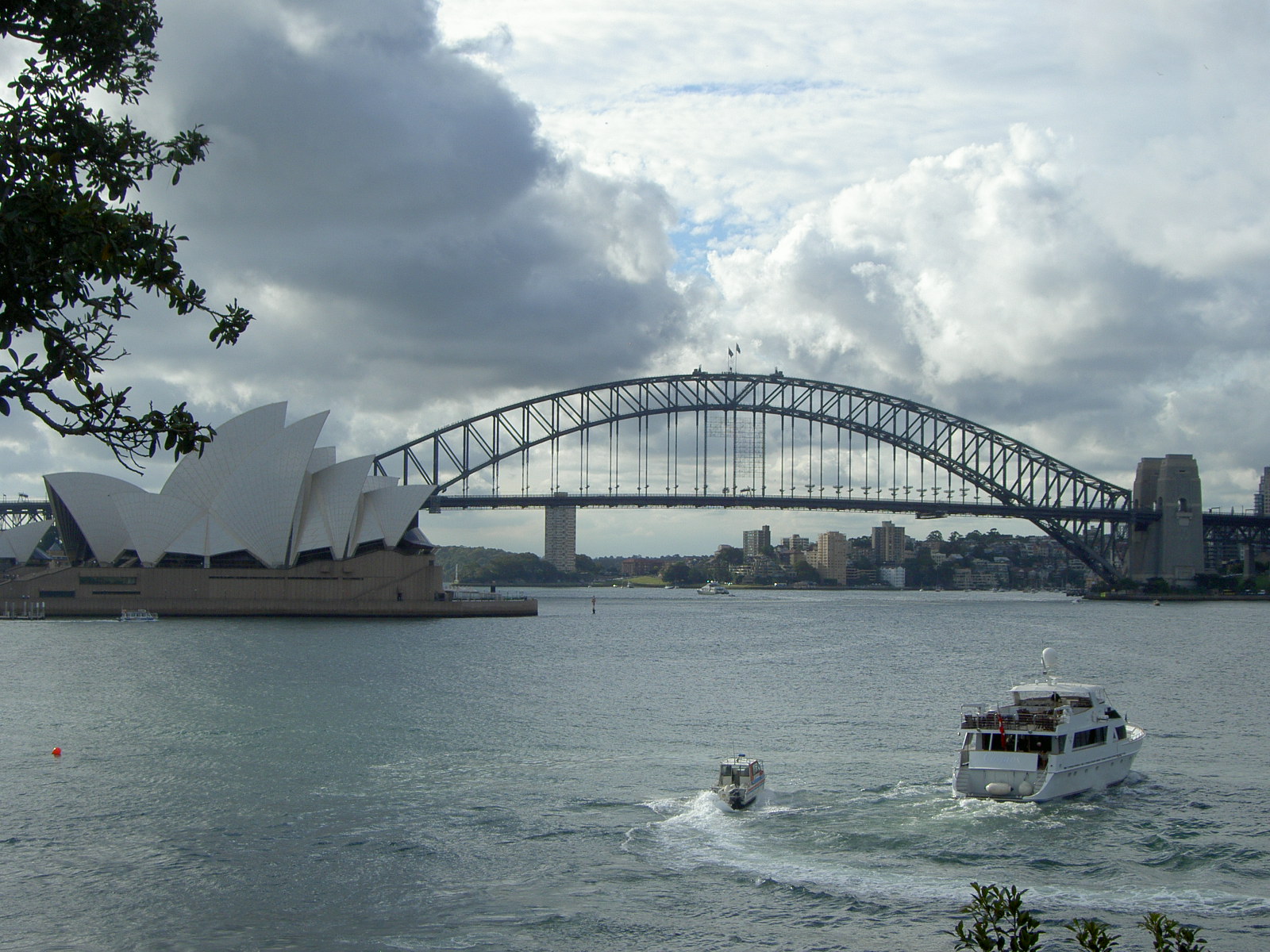
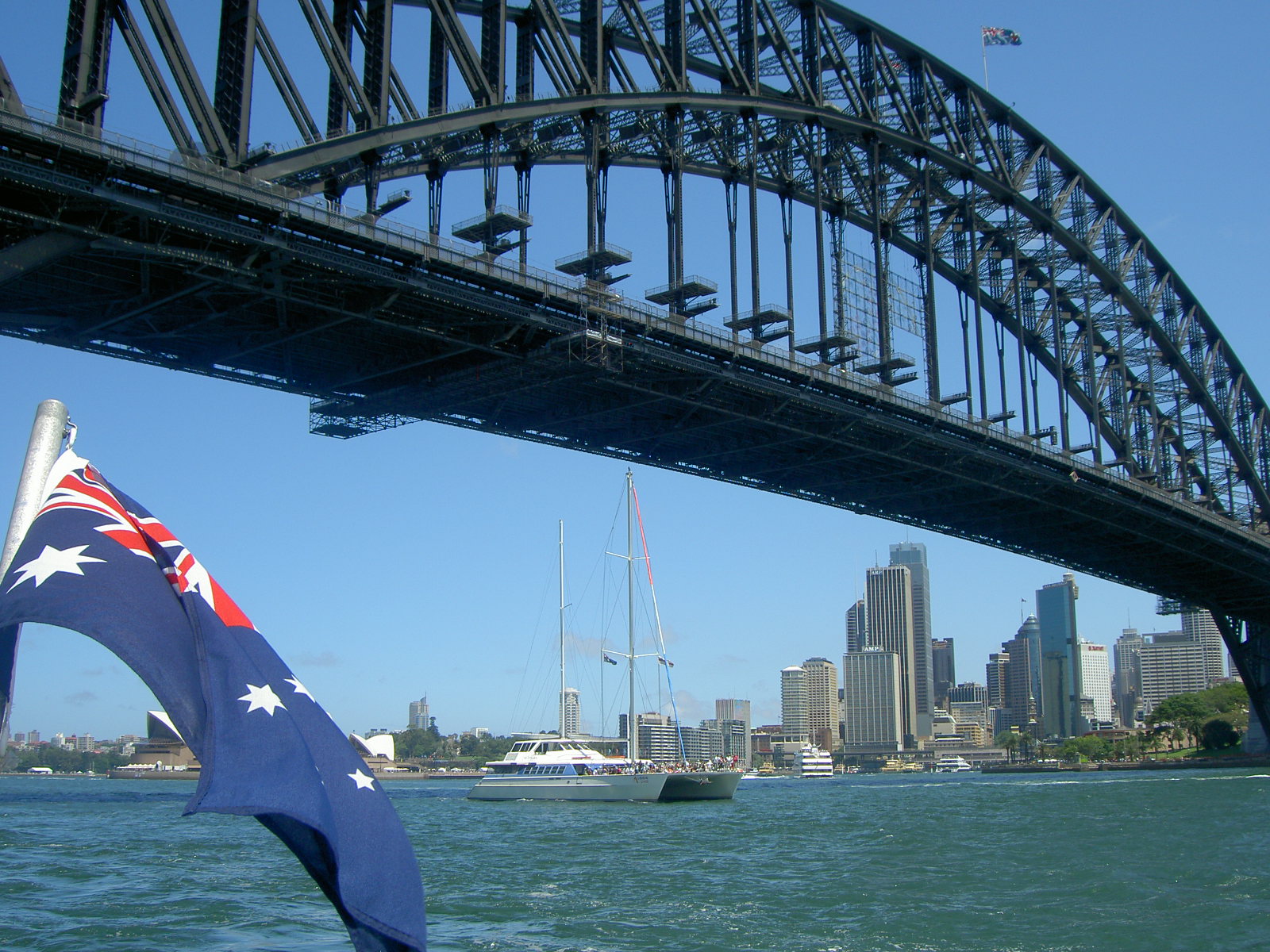
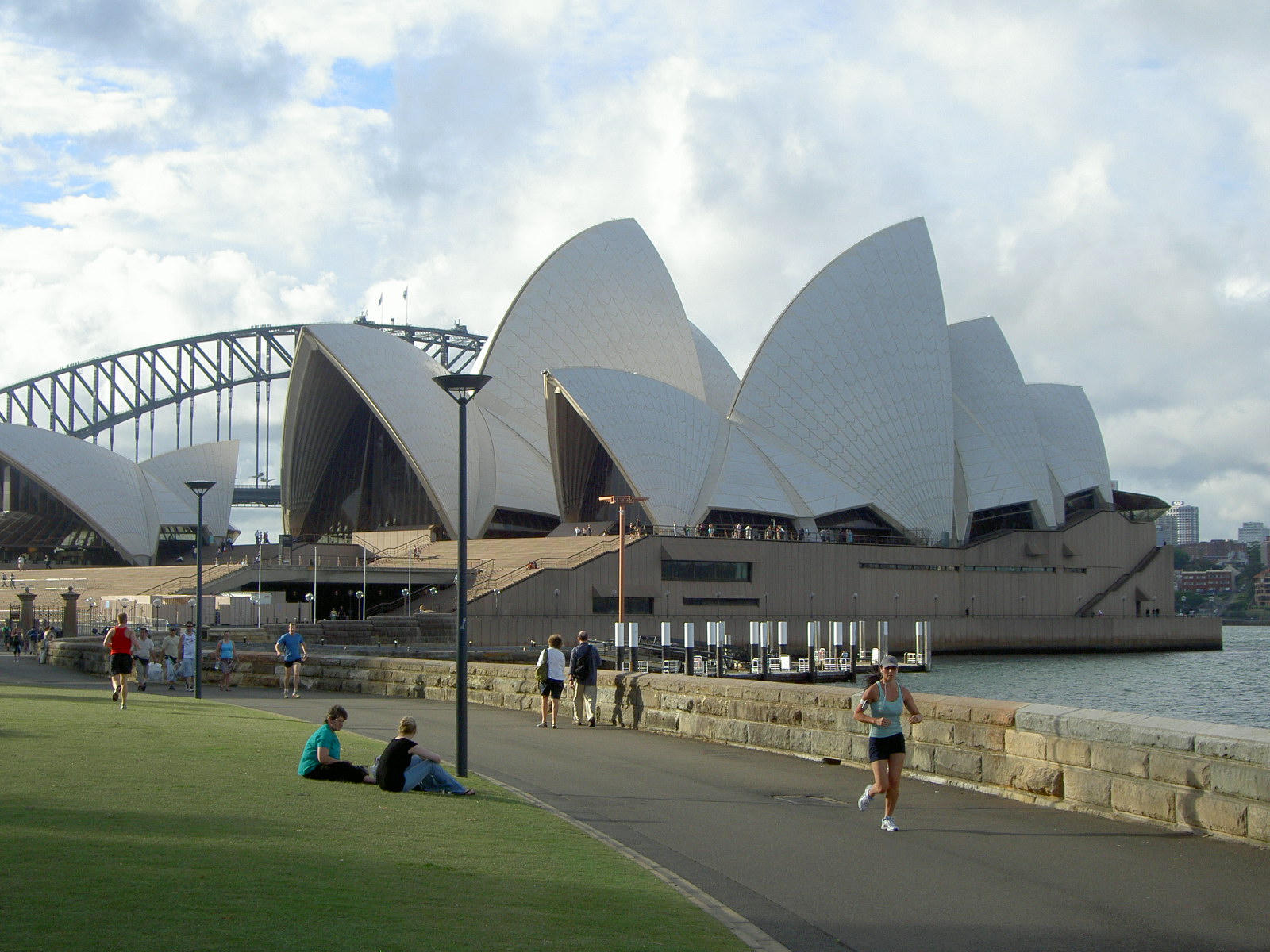
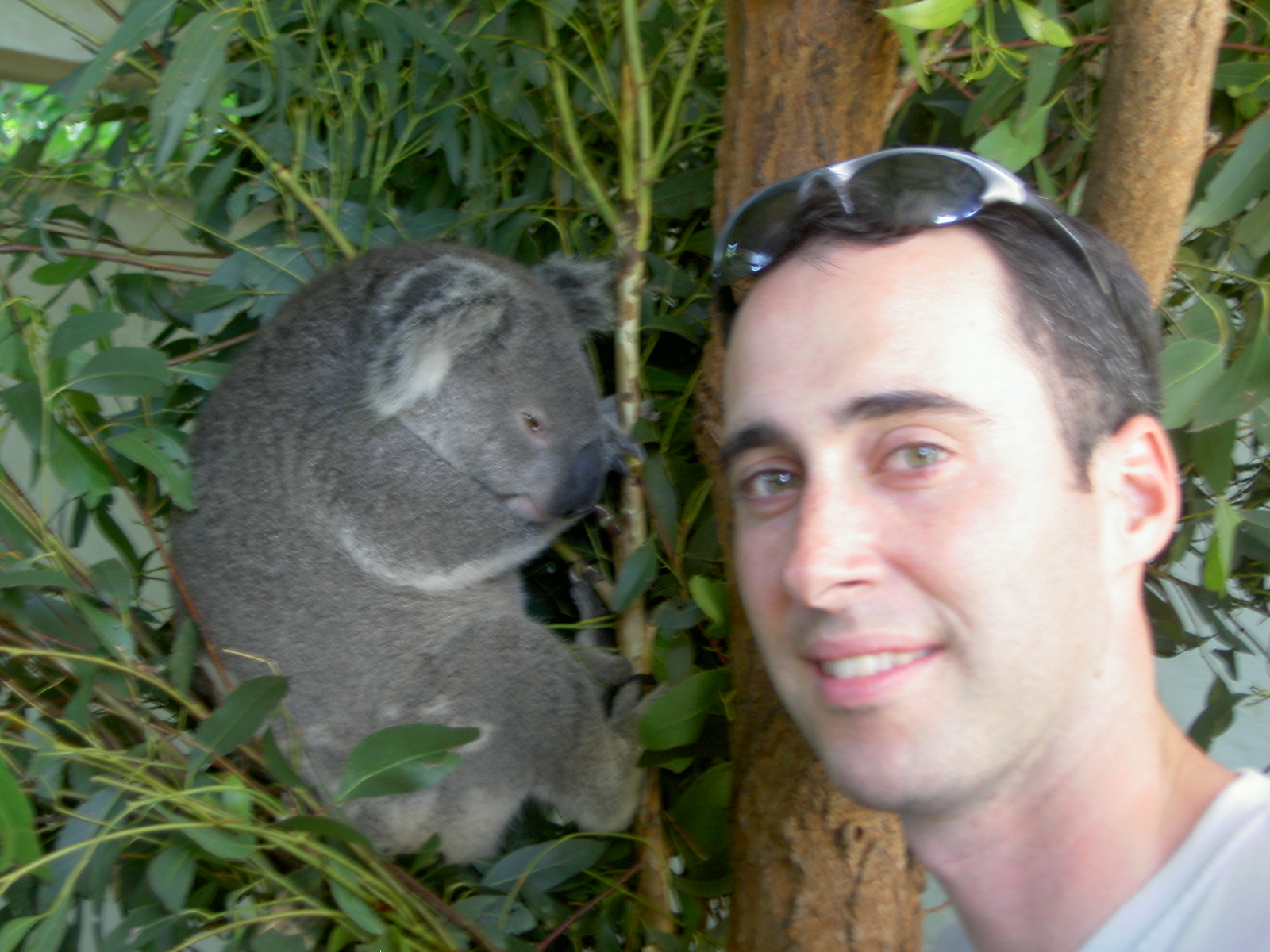
Sydney: I’ve been to about 30 countries in my life and can say with confidence that Sydney is the most beautiful city I’ve ever seen. Its summer here now so the weather was warm and sunny almost every day we were there. The city is right on the harbor so we got around on ferries to different parts of the city. Got to see the iconic Sydney Opera House with the Sydney skyline in the background. Went to the Taronga zoo and got up close with a koala. Walked through the botanical gardens and saw probably one hundred different trees I’d never seen before. Sydney’s residents are beautiful, in shape, young. Our necks are sore from checking out all the female scenery that is to be seen here. Bondi beach was awesome too. I went swimming there for an hour or two and saw some surfers impressively handling some nice waves.
Sydney Harbor
Sydney Harbor
Sydney Opera House
Me and a koala
Cairns: Today we flew up to Cairns, the major gateway to the Great Barrier Reef. Australia is about as big as the US, so the flight from Sydney to Cairns covers roughly the same distance as New York to Miami. It feels very South Pacific here, with the humid temperature, turquoise water, and lush rainforest mountains surrounding the city. Had some kangaroo, emu, and crocodile meat today. We enrolled in a SCUBA certfication course so thats what I'll be doing for the next 4 days. We had our first day today and I really liked it. Can't wait to get out on the Reef to see some cool stuff. Next we're off to Melbourne.
Hope everyone is doing well!

Wednesday, October 24, 2007

Crimes and Misdemeanors

After another good meal the at the Taji DFAC, I walked outside with my friends Alex and Dave to discover that my bike was stolen from the bike rack I left it in. I didn’t lock it up before going into the mess hall because I had left it out there every night for the last few weeks and no one messed with it. That night was the first night I went to dinner a little late, when it was already dark, and the thief took advantage of the darkness. The bike only cost me $20 second hand from another soldier, so it certainly wasn’t a financial disaster. But I was angry both with the thief and with myself because my mother had just sent me a bike lock to use. Shrugging it off, I walked back to work and was then made the butt of several jokes amongst my fellow officers.

The same night, my spirits were lifted by the delivery of two care packages—one from my father and another from my Uncle’s friend at Unilever. Since I didn’t want to carry them the half mile back to my barracks, I decided to drop them off using our beat-up old John Deere Gator utility vehicle. I brought the two boxes out to the Gator, absentmindedly dropped them in the open bed in the back, and began fumbling in the dark with the lock on the steering wheel. I drove back to the barracks, got out of the vehicle to get my two boxes, but realized that there was only one box in the back! One must have fallen out. Oh, no. I immediately retraced my path, keeping an eye out for a cardboard box lying around in the dirt, but found none. How could this have happened? It must have fallen out on one of the many sand bag speed bumps or on a sharp turn I made. Having confidence that someone must have seen the box in the 2 minutes I was gone and picked it up in a good natured gesture to later return to me, I wrote the box off as lost only for the night.

One week later, I still have not seen my Dad’s care-package. The pretzels and cookies in it are probably long gone, having found their way through some other soldier’s digestive track. If all of this dishonesty in one night seems improbable, I’ll give the soldiers on Taji the benefit of the doubt. Maybe Explosive Ordnance Disposal found the box, considered it a suspicious package, and blew the thing to bits? But having not seen any singed wet wipes, cookie crumbs, or pieces of the Bergen Record newspaper laying anywhere along route I took that night, I have to admit that the suspicious package explosion thing probably didn’t happen. In the meantime, I hope that the unhealthy cookies cause a serious bout of digestive complications for the person(s) who took my box, and perhaps contribute in a small way to the growth of a second chin.

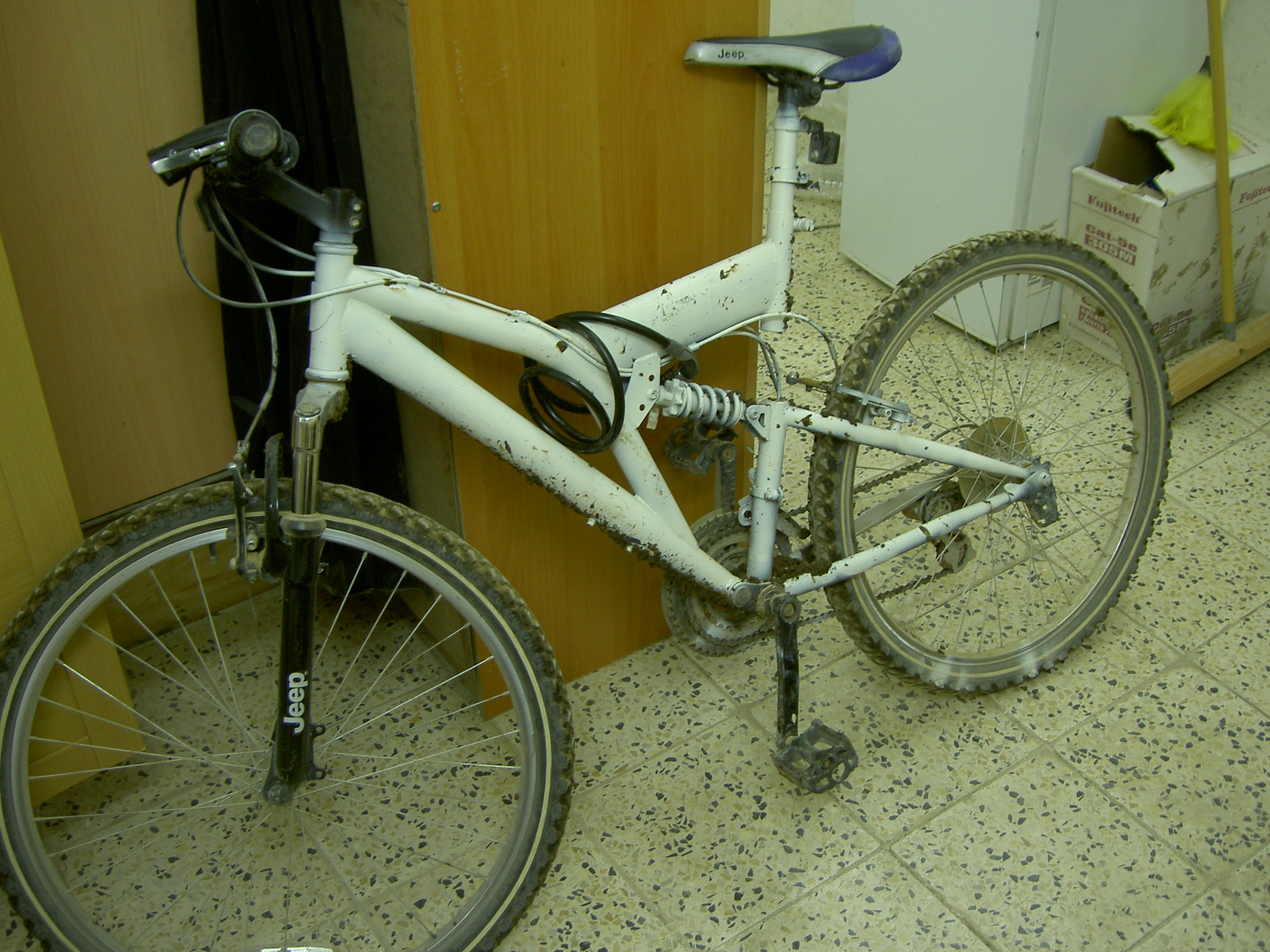
After having spent a day checking out every bike that I saw (Taji isn’t that big, after all) and eyeing all bike riders as possible suspects, I went to dinner with my friends. On my way in to the mess hall, I took a quick look at the bikes in the rack. One on the right side was the same shape and style as mine; only it was spray-painted completely white. Upon closer inspection, I blurted out to my friends, “This is my bike.” I spent the next few minutes noticing all the identical features, including the Krypton headlight I recently installed, the identical brand name, blue color (underneath the shoddy spray paint job), helmet, gear shifter stuck in one gear, seat tilted too high upward in the front, etc. I could also see spray paint marks on the tires, indicating that the spray job was very recent. It was my bike. I couldn’t believe it. I waited outside at a distance for a while to confront the person who might lay claim to the bike but no one walked over to it. I was hungry so I brought the bike to the mess hall’s guard shack to have the guards look after it while I ate, so the thief may have walked out and saw the bike missing and took off. The sheer stupidity of placing the bike in the same rack with such a shoddy paint job leads me to believe that the person either 1) slept on it and reconsidered what a dumb idea it was to steal a bike on an Army base, 2) found out it was a bad bike (the brakes stink and the gears don’t shift), or 3) felt bad about it and left it in the same rack for me to find on my way to dinner. Either way, I sleep here at Camp Taji with the knowledge that a share with this base with at least one moron.

Here is what my bike looks like now. I acutally kinda like the new color scheme. Thanks man!

Sunday, October 14, 2007

At the DFAC

Since nothing much is going on, I decided to write about what us Taji-confined soldiers truly cherish most: the Dining Facility (DFAC, Armyspeak for mess hall). Conveniently situated only one mile from our living area, the DFAC is well worth the trudge through the heat, dusty parking lots, and PortaPotty-induced olfactory horrors that make Camp Taji the wonderful place I already know it to be.

I spend about 2 hours a day at the mess hall so I wanted to write a little bit about it. The Taji DFAC looks nothing like the stereotypical mess hall. It is well-lit, clean, offers a great selection of foods, and is run by civilian contractors. I have to hand it to Gulf Catering, the contractor who runs our mess hall. Their dozens of Indian servers do a really good job and are very nice to us troops coming through the lines. On the days the DFAC serves chicken or beef curry, you’ll see a line of Indian workers wrapped around the side of the mess hall. That’s how I know its good curry. Their company is a subcontractor for KBR, which is a subsidiary of Halliburton, Dick Cheney’s old firm. Evidently, our Vice President is very good at contracting things out, just as he contracted out his responsibility to serve in the Vietnam War to less fortunate Americans by obtaining five draft deferments.

At breakfast, I am put in the enviable position of deciding amongst a made-to-order omelet, scrambled eggs, bacon, sausage, ham, hash browns, grits, French toast, pancakes, and oatmeal. Just when I think I’ve seen enough food to last me all day, there is the cereal table. Alongside the blander Cheerios and Special K boxes are the more decadent cereals like Fruit Loops, Lucky Charms, and Cocoa Puffs, treats my Mom never let me touch. Because she is now 10,000 miles away, I’m already starting to put on a little weight, something I thought was not possible due to my naturally high metabolism. Oh well, I have a lot of time to work it off before returning to the States next spring.

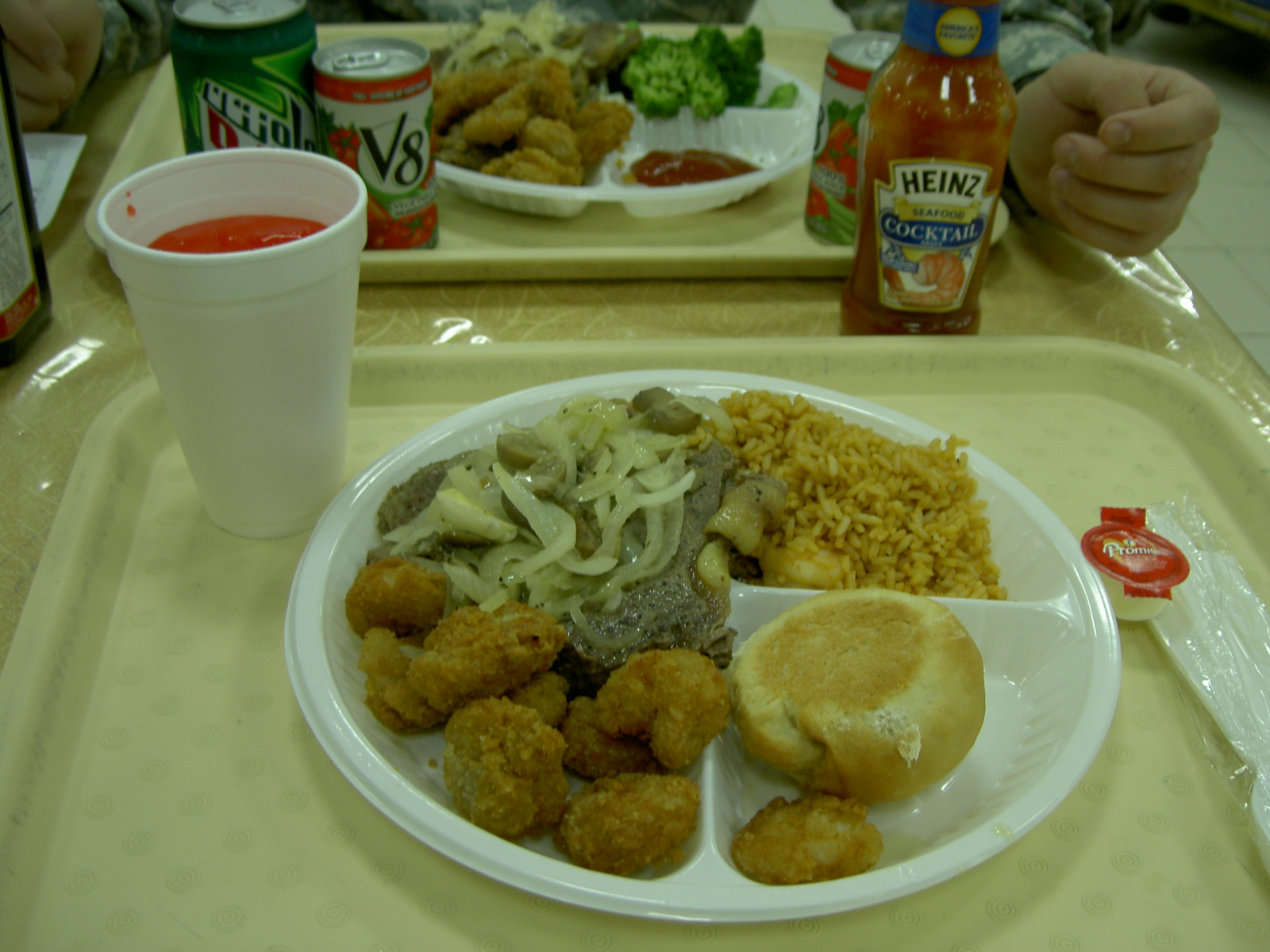
Lunch and dinner feature more of the same, but even go more overboard in terms of the variety of foods served. Overboard is nice, but I have to ask myself how much KBR charges the U.S. Government for a soldier to eat a meal here. That issue being way above my level as a lowly Battalion Logistics Officer, I instead focus on only what I throw on my plate. For lunch, I can get a sandwich, soup, burgers, hot dog, cheese steak, salad, pizza, tacos, rice, mashed potatoes, fruit, and just about any other basic sort of food. Dinner is equally good. We even get crab legs on Sunday, although the shells are dangerously sharp. Probably the most dangerous thing I do all week, breaking up crab legs in a hostile fire zone is not a task I take lightly.

A recent lunch at the DFAC: no, those aren't worms on the steak. They're onions.
-------------------------------------------------------------------------
Side note: I’ll be going to Australia with my friend Alex in late November for a two week R&R. I decided to take my vacation early this time around. Let me know if you’ll be in Sydney around Thanksgiving time!

Monday, October 1, 2007

Settling in

I read all of your responses and agree that I should keep on writing. I understand that it’s important to read a first hand account of what many soldiers go through on a daily basis here. Plus, I enjoy writing and it’s a good way to communicate with my family and friends.

My unit is responsible for manning several guard towers and entry control points around Camp Taji. We haven’t had any incidents yet, except for the other day when some gunfire (I think celebratory) hit near one of our towers. Camp Taji has been really quiet so far. The outgoing force protection officer said that the area around this base use to be really violent. Mortar and rocket attacks were a common occurrence up until a month ago.

Our guard towers are now made of concrete and bulletproof glass, so our soldiers are pretty safe on their shifts and still able to fire their weapons out when they need to. Only a few months ago, the towers were made of just steel and wood. The unit we replaced had a female soldier severely wounded by shrapnel from an RPG blast and another soldier sniped from a high-powered rifle. The bullet grazed his ear, miraculously went in his helmet on one side, curved around the inside back of his helmet, and exited the other side.


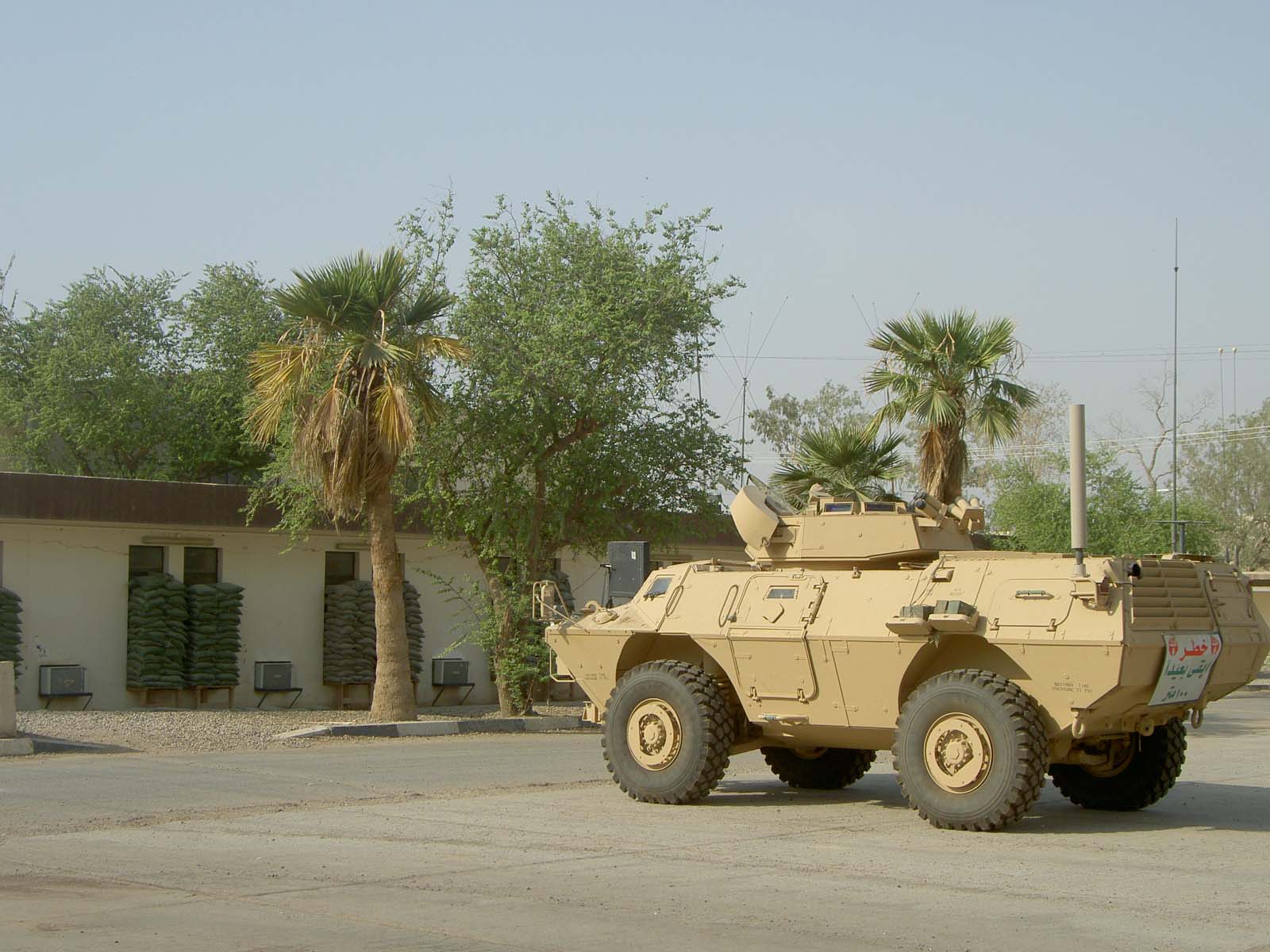
The main highway in Iraq, MSR (main supply route) Tampa, skirts the western wall of our base and is probably the most dangerous road in the world. I live about 300 yards from this road and can see the tops of the trucks driving by at all hours of the day. I used to drive on MSR Tampa back in 2003 with no body armor and no armor on my Humvee. Times have definitely changed. Although the portion of MSR Tampa near Camp Taji has been safe this month, there are still incidents. Two months ago, an American ASV (the vehicle in the above picture) ran over a pressure plate mine on the highway only 30 yards from one of the guard towers. Despite the mine’s small charge, the explosion was powerful enough to flip the ASV over. Almost immediately, the vehicle caught fire and the soldiers inside got trapped and were burned to death. The soldiers in the nearest guard tower inside the base perimeter had to stand helplessly by as the soldiers screamed in agony. My friend who went out to assist said he is still haunted by the sound of those soldiers dying.

We’ve been busy over the last few days improving our buildings and surrounding areas. Our new headquarters building was an empty shell when we got here so we have our work cut out for us. As the logistics officer, I’m setting up some contracts for things such as gravel, vehicles, blast walls, copiers, and printers. The work keeps me busy and allows me to meet a lot of different people on the base, from 1st Cavalry Division guys to KBR (Kellog Brown and Root) to Iraqis who come into our base to sell items that the Army needs.

Hope you all enjoyed the update. I'll write more when I get a chance.